Image Map
Showing posts with label reading. Show all posts

Monday, February 12, 2018

What We've Been Doing in Reading

If you ask the students about one of their favorite times of the day, outside of lunch and recess of course, many would say reading.  We have reading throughout our day--we have a read aloud, we work on reading together, and we have a workshop time where we get to read by ourselves and then with a partner or small group.  I am so pleased with how much we have grown as readers!


We've learned so many things about reading--how a book works, how to bring a book to life, learning different vocabulary like non-fiction and character--but we've mostly worked on two really BIG things. We've learned how to use our super reader powers to help us figure out the words, and we have learned how to think and talk about books.  


Some of our super powers are things like using a pointer when reading so that we always know which word we're going to say.  We've developed picture power and sound power to help us figure out unknown words.  Sight word, or snap word power is another trick we have to help us read.  We're learning how to change the vowel sound, chuck big words into smaller parts, and we're predicting what words we might read when we preview a book.  Sometimes we have to super-size our super powers because words and books are getting harder! While we are reading, we are asking ourselves if what we are reading make sense, does it sound right, and does it look right.  


In addition to all of that, we're thinking while we read both so that we can understand the book better, but so that we can share what we're reading with others and talk about it.  We make connections with books by thinking of what we already know or what the book makes us think about while reading.  We make predictions both before and during reading and we check to see if we were right.  We wonder, we notice, and we think big!  Then we share with our partner or our class as a whole.


A big chunk of our reading time happens during our reading workshop where students read independently or with a partner.  But I do read to them daily, sometimes multiple times a day.  Sometimes I pick the book and sometimes the students do.  We work on figuring out what characters think, what big ideas the author wants us to learn, and we just enjoy it!  We read many poems, too, to help us practice our skills we're learning.  

Sometimes we get to read to special people like our principals and our first grade friends. 

We get to choose what we read and we get to choose a comfy spot to help us do all of this important work.  Parents often ask what they can do at home to help their child grow as a reader and the answer is simple.  Do what we do at school:  read to them, let them have some choices on what to read, and have them read to you.  Happy reading!

Tuesday, March 10, 2015

I Can Ask Questions

We've been busy learning that good readers ask questions while they read.  We first had to learn what a question is!  We spent some time thinking about what words we would use to ask a question. Kindergarteners are very good at asking questions, but it's usually when they are not thinking about it.  Interestingly it is when you want them to ask a question when they start telling you all sorts of stories and connections instead of a question.

Here is a chart we made to help us remember what words questions typically start with:
In addition to talking about question words, we discussed why readers ask questions.  We put that on our chart as well.

We practiced asking questions for both fiction and non-fiction texts.  We read many fictional texts, but one that stands out is Charlie Anderson.  Ask your child to retell that story to you at home.  It was such a surprising book, and asking questions really helped us make the story more clear--just like readers!
We read many non-fiction texts, too, but one topic that stood out is penguins.  With a non-fiction text, we started off thinking about what we already knew and what we wanted to know--which generated a lot of questions!  Our next job was to read about penguins and see if we could find the answers to our questions.  Below is a picture part of our findings.  The green notes were things we already knew before reading and were confirmed by our reading.  The yellow notes were questions we had before we read anything and we added questions on yellow notes as they came up during our reading.  The red notes are for new learning.  Some of our new learning answered some of our questions.  We tried to match up the yellow question with the red answer.
We learned that sometimes readers have questions that the author didn't answer.  Time for more research!

When reading at home with your child, feel free to share questions about a story or topic you have and see if you can find the answers in the text!

Wednesday, January 14, 2015

Learning About Fiction

One of our literacy focuses this week was to learn about the characteristics of fiction.  First we read The Snowy Day by Ezra Jack Keats.
We learned that fiction stories have a character in a setting that does something.  Ask your child about who the main character in The Snowy Day is and where the story took place (the setting). Look at our thinking map for retelling what Peter did on his snowy day.
Next we read Sneezy the Snowman by Maureen Wright.  We loved this story!  It was so fun to read when the students could help me read it.
With Sneezy, we remember that stories have a character in a setting that does something, but we also learned that often fictional stories have problems.  Ask your child about what Sneezy's problem was. We learned that stories have solutions, too.  Sneezy tried lots of things to solve his problem. Ask your child which of Sneezy's attempts at solving his problem was his/her favorite.  Then ask them about which solution actually worked!

We talked about how stories have to have a beginning, middle, and an end with fiction, too.  Here is a quick picture of how we sequenced the Sneezy story.
Then we read Time to Sleep by Denise Fleming.
We continued our discussion on characteristics of fiction with this book, too.  We noticed that a lot of what was happening in the book sounded true like in non-fiction, but with the characters talking to each other, doing things, we realized that it is a fiction book, too.  Here is our thinking map for the characters in the story Time to Sleep.
The next time you and your child read a fiction text, think about who the characters are, where they are at, and what are they doing.  Is there a problem?  If so, how did the character solve it?  Encourage your child to retell the story from the beginning to the middle to the end.


Wednesday, November 26, 2014

Talking About Books, Connecting Across Texts

One of our goals as readers is to talk about books.  We're lucky to have different books revolving around a particular concept or theme.  Each child reads a book that is just right for him or her.  Then we get into small groups with students who have read a different book on the same topic or theme. Students talk about each of their books and discuss a main idea or question.  We call it Talking About Books, Connecting Across Texts, or TABby CAT time.  Our 5th grade buddies were a lot of help getting us established with talking about books.  Check it out:


We do such a nice job of taking turns, listening to what a friend has to say, and responding to all of the texts.  TABby CAT is a fun time!

Monday, November 17, 2014

Learning About Cause and Effect

Retelling a story in sequence is a good way for us to learn about cause and effect.  When we talk about events that occur in the book we're reading, we want to know why that event happened.  What caused it?

One of the texts we read is Sofia and the Sunflower.  While reading the story, we noticed a lot of similarities to the classic tale of Jack and the Beanstalk.  One of the main events that happened in Sofia and the Sunflower was that it started to rain after a drought.  What caused it to rain?  What happened because it rained?  Check out our thinking below:
Ask your child why it started to rain when the giant fell down.  Ask your child what happened, or what was the effect, after the plants started to grow?  Ask your child to retell the story of Sofia and the Sunflower.  

We read other books to talk about cause and effect, too.  One of our favorites was Pete the Cat:  I Love My White Shoes.  After retelling the story, we made another chart to help us understand cause and effect:
Using real-world examples to teach cause and effect is great, too!  With your child, talk about what effect would happen if teeth weren't brushed?  What might happen if vegetables weren't eaten? What effect would there be if no one cleaned up? What would cause someone to get a time out at home? Things to think about!

Since Sofia and the Sunflower reminded us of Jack and the Beanstalk, we spent time reading that story, too.  Check out our comparison thinking map for the two stories below.  (J stands for Jack and S stands for Sofia).  

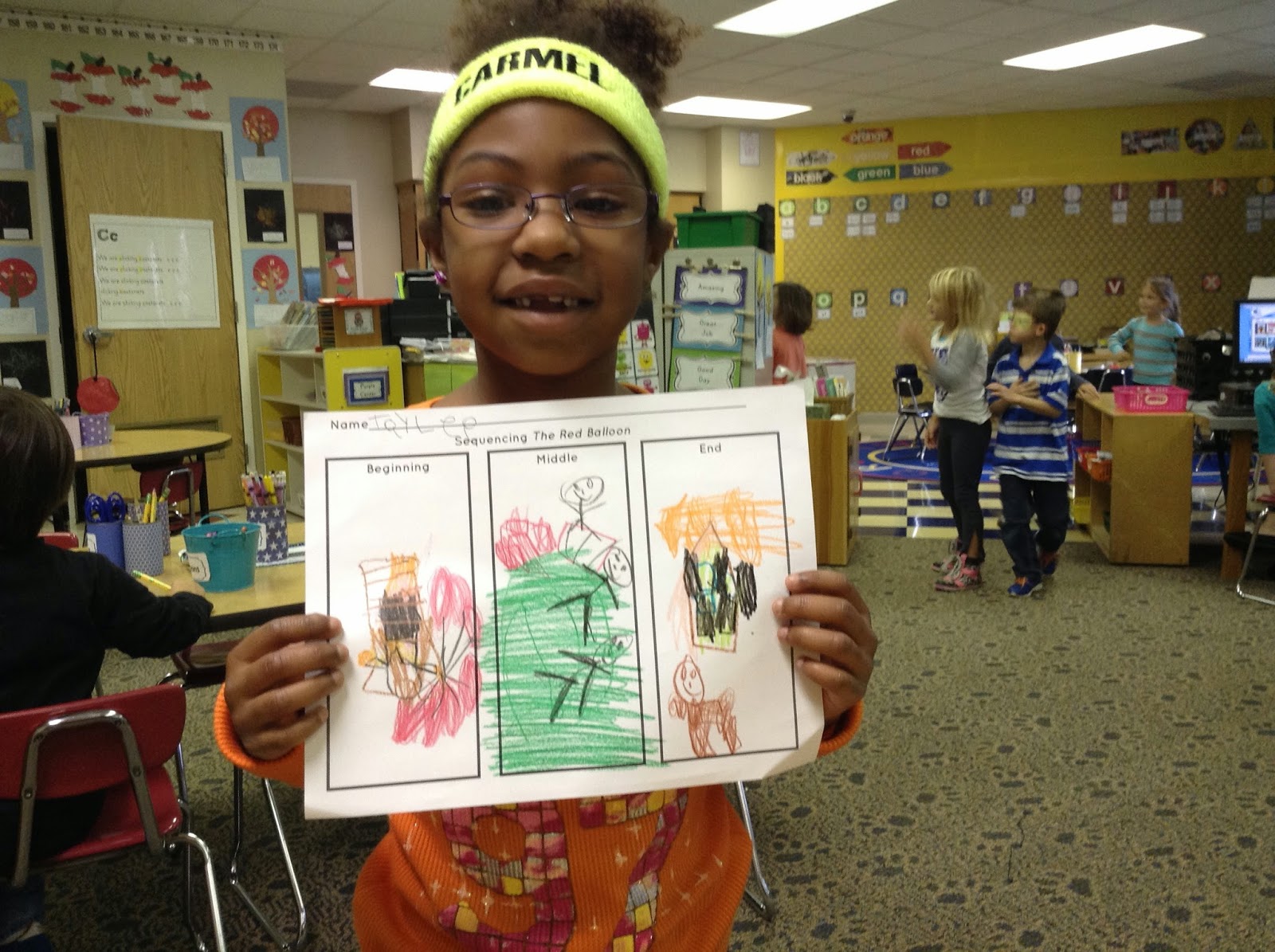
Sequencing a Story

One of the ways we're learning how to be better readers to to think about how the story goes.  When we retell, we want to think about what happened at the beginning, the middle, and the end of the story. Sometimes we draw pictures to help us retell the beginning, middle, and end of a story.


Friday, October 10, 2014

Making Predictions

I've realized that I haven't shared a lot about what we are doing in reading yet this year.  Just because I haven't shared what we're doing in reading doesn't mean we haven't been doing any!  :)

One of our focuses in reading over these past few weeks has been to make predictions.  We have learned to make predictions before we start reading and while we are reading.  We first learned that a prediction is a good guess about what might happen or what might an answer be.

One of the books that really helped us focus on making predictions was Blueberries for Sal by Robert McCloskey.


During our reading of the book, we made predictions about what might happen next, about how the characters might be feeling, and why the characters might be making the choices they are making.

We realized that there were three things that helped us make predictions.


We can look at the pictures.  We can think of what the words are telling us.  We can use what we already know.  Each time a student makes a prediction, we practice telling how we came up with the prediction.  Was it from the pictures?  Was it from the words in the text?  Do you know something about this already?

We have made predictions while reading so many of our books.  Good readers make predictions while reading every book!  We'll continue to work on making predictions all year.  We're working on finding out if our predictions were correct or not.

Tuesday, March 4, 2014

Making Connections with Books

One of our goals is making connections to the text while reading.  One of the ways we can make connections is to think about how books remind us of other books.  Boy have we been busy with this!

First, we read several books on winter and hibernation:


Then we compared the two.  It was a great way to review or retell what we have read in the books.  Here is a chart we made to show our thinking and connections:


We compared two fictional books as well.  


These books were written by the same author and used the same characters.  See how we found the books to be similar:


The next time when you and your child read together, ask you child what connections he or she can make to the book.